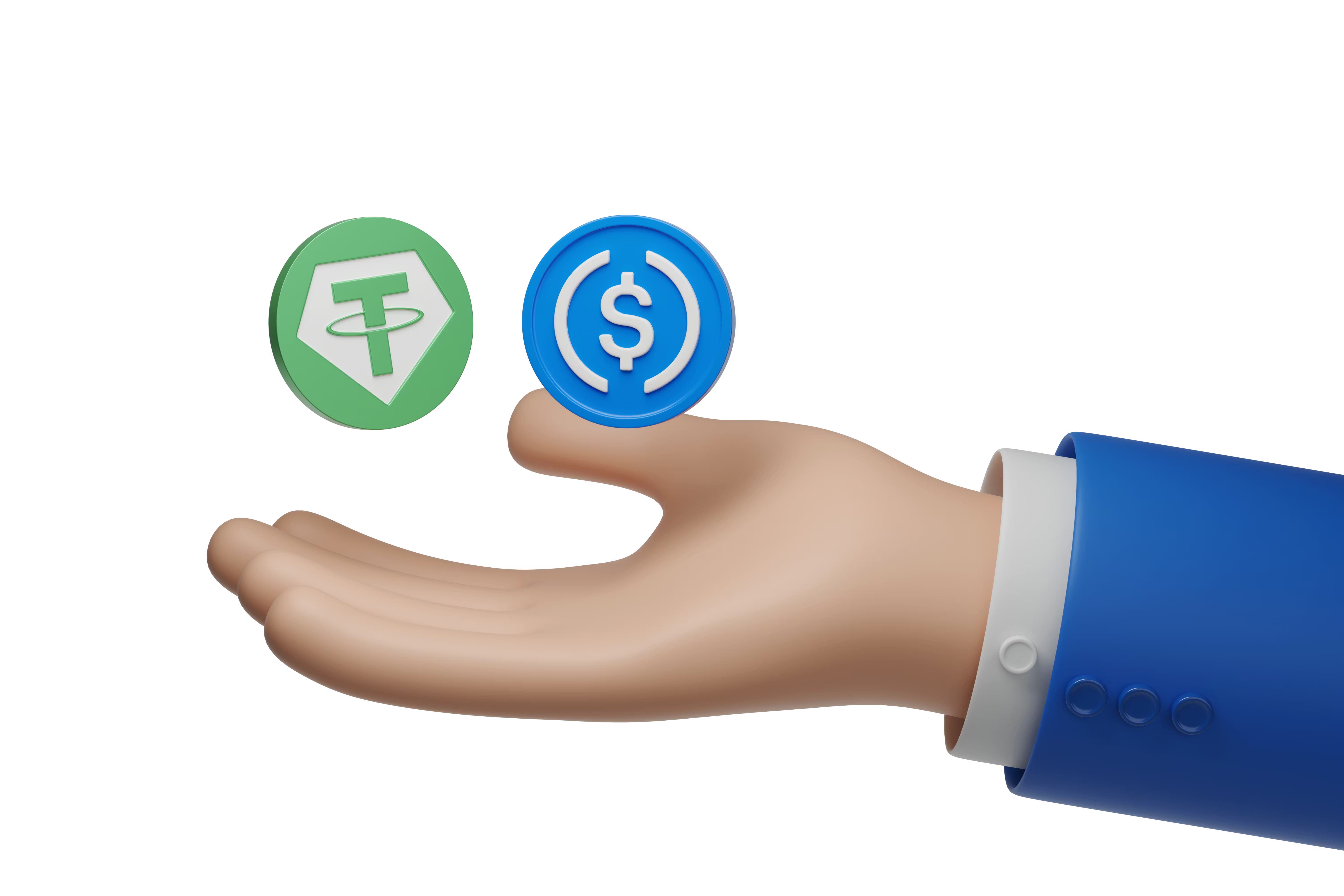
As we navigate through 2026, the financial landscape is undergoing a silent revolution. For years, cryptocurrencies were viewed with suspicion by CFOs and treasurers due to extreme volatility. However, the rise of stablecoins—digital assets pegged to stable reserves like the US dollar—has fundamentally altered this perception. No longer just a tool for crypto traders, stablecoins have become the backbone of a new, efficient payment infrastructure.
According to industry analysis, global stablecoin volume reached $4.5 trillion in Q1 2026, signaling a massive shift from speculation to utility. With regulatory frameworks like the EU’s MiCA and the US GENIUS Act providing clarity, businesses are integrating stablecoins multiple times a day to settle cross-border invoices, manage treasury, and even process payroll.
Here is how stablecoins are reshaping business-to-business (B2B) payments in 2026 and why your enterprise cannot afford to ignore them.
The Shift: From “Crypto” to “Payment Rail”
In the past, discussing crypto payments meant accepting price risk. Today, stablecoins like USDC and USDT have solved the volatility problem. As highlighted by industry experts, the conversation has shifted from “investing in crypto” to “utilizing blockchain settlement.”
Recent data shows that B2B crypto payments now account for 60% of all stablecoin transaction volume, primarily driven by cross-border vendor payments. Business finance is moving on-chain, separating treasury management from the legacy fractional reserve banking system.
The Trillion-Dollar Opportunity: Cross-Border B2B
The most significant impact of stablecoins in 2026 is in cross-border B2B transactions. Traditional correspondent banking is slow, expensive, and opaque. A simple international wire can take 3-5 days, incurring SWIFT fees, intermediary bank charges, and unfavorable FX spreads, often costing 2-4% of the transaction value.
Stablecoins offer an alternative. A recent Juniper Research study found that the total value of cross-border B2B stablecoin transactions is projected to reach **5 trillion by 2035**, up from 13.4 billion in 2026.
Why are businesses switching?
-
Speed: Settlement occurs in seconds, 24/7/365, unlike bank wires restricted by cut-off times and weekends.
-
Cost: Enterprises save 70-90% on international payment costs by using stablecoins instead of wire transfers.
-
Transparency: The blockchain provides a public, immutable ledger, drastically reducing reconciliation efforts.
The New Infrastructure: Fintech and Banking Convergence
2026 marks the year when fintech giants and traditional banks stopped experimenting and started building.
Major Acquisitions and Networks
The infrastructure is now in place to support mass adoption. Mastercard acquired BVNK for 1.8 billion, while Stripe acquired Bridge for 1.1 billion. In a landmark move, Stripe even announced in early 2026 the launch of its own blockchain, Tempo, designed specifically for enterprise-grade cross-border settlements. These developments have created the “plumbing” necessary to move money seamlessly between crypto rails and traditional bank accounts.
Regulatory Clarity (MiCA & GENIUS Act)
Regulation is no longer a hurdle; it is a catalyst. In Europe, the Markets in Crypto-Assets Regulation (MiCAR) has set a global standard, specifically for e-money tokens. While some reports indicate that MiCA’s strict rules (like the prohibition of interest on euro stablecoins) may stifle euro-denominated tokens, the overall effect has been to legitimize the asset class globally.
In the US, the GENIUS Act is providing similar clarity. As PwC notes, the regulatory momentum is actively reshaping markets, enabling digital assets to scale responsibly.
Real-World Use Cases in 2026
Stablecoins are no longer theoretical. Here is how they are being used by businesses times over this year:
1. Treasury Management (The “Programmable Dollar”)
Companies are using stablecoins to automate complex treasury functions. Through smart contracts, businesses can set up automated sweeps, moving excess funds into yield-bearing products at the end of each day, or conditional payments that release funds only when a shipment is confirmed.
2. Vendor and Contractor Payments
Global remote work has created a nightmare for payroll. Paying a developer in Argentina or a design agency in the Philippines via wire is costly. Stablecoins allow instant settlement directly to digital wallets. In 2025 alone, consumer-to-business (C2B) stablecoin transactions grew 128% year-over-year, and the B2B sector is following suit rapidly.
3. Financial Operating Systems (Altitude)
Startups like Squads (backed by Solana Ventures and Coinbase Ventures) are building “Financial Operating Systems” like Altitude. These platforms replace traditional bank accounts with stablecoin wallets. Since launching, Altitude has processed over $200 million in payments for exporters and global agencies, offering multi-currency accounts and global API payouts.
Challenges and Risks
Despite the momentum, adoption is not without friction. Many CFOs still face “career risk”—the fear of trying something new that fails.
-
Regulatory Arbitrage: While the US and Europe have clear rules, the global landscape is a patchwork. The EU’s MiCA, for instance, has been criticized for making euro stablecoins “commercially unviable” compared to dollar-pegged coins, potentially leading to a digital dollar dominance.
-
Redemption Risk: Businesses need certainty that they can convert 1 stablecoin back to 1 stablecoin back to 1 fiat instantly. During times of market stress, liquidity must hold.
-
Compliance: Anti-money laundering (AML) and know-your-business (KYB) checks are harder on pseudonymous blockchains. However, new platforms are building compliance engines that impose the same checks expected of any regulated fintech, bridging the gap between DeFi and TradFi.
The Future Outlook (2026-2030)
We are entering the “Stablecoin Summer,” as described by Stripe’s founders. The current phase is one of infrastructure maturation. By 2030, stablecoins will likely be a default option in most ERP systems, sitting alongside ACH and SWIFT as a standard payment method.
The winners in 2026 will be those who build compliance by design—proof of reserves, operational resilience, and transparent disclosures built directly into the code. For businesses, the question is no longer whether they should adopt stablecoin payments but how quickly they can integrate them to stay competitive.
For the latest daily updates on this rapidly evolving space, follow @BlockchainNews on Twitter. For in-depth institutional analysis and reports, connect with PwC’s Crypto team on LinkedIn.
Frequently Asked Questions (FAQ)
1. Are stablecoins safe for large B2B transactions?
Yes, provided you use regulated platforms. Stablecoins like USDC are issued by regulated entities (Circle) and are backed by highly liquid reserves. For security, enterprises use Multi-Party Computation (MPC) wallets or Multi-Signature (Multi-Sig) wallets to prevent a single point of failure and require multiple approvals for large transfers.
2. How do we pay a vendor who doesn’t accept crypto?
You can use a “last-mile” conversion service. Several payment processors (like Stripe or licensed PSPs) allow you to send stablecoins; they convert the funds to local fiat currency and deposit them into your vendor’s bank account. The vendor gets cash, while you benefit from the speed and low cost of the crypto leg.
3. What is the tax implication of paying with stablecoins?
In most jurisdictions, spending a stablecoin is a taxable event, but because the value remains stable (e.g., 1 USDC to 1 USD), the capital gain or loss is usually negligible. However, you must track the transaction. The payment itself is treated as a standard business expense. Always use crypto accounting software to log the disposal of the asset.
4. Which blockchain should I use for payments (Ethereum, Solana, or Tron)?
It depends on your priority.
-
Solana: Fastest (<1 second) and cheapest (<$0.01). Best for high-frequency trading or speed-critical business.
-
Tron: Very cheap and highly liquid for USDT, popular in emerging markets.
-
Ethereum: The most secure and decentralized, but gas fees can be high (2−20) during congestion.
5. Is stablecoin adoption really growing in 2026?
Absolutely. Beyond the speculative data, real utility is soaring. Visa’s on-chain analytics show that, after removing bot and exchange activity, stablecoin payments for “real economic activity” are at an all-time high. Monthly on-chain volumes are exceeding $9.3 trillion, proving that stablecoins have become the dominant digital asset for commerce.
6. What is the “GENIUS Act,” and how does it affect my business?
The GENIUS Act is the proposed US federal framework for payment stablecoins. It provides regulatory clarity on reserve requirements, redemption rights, and operational resilience. For businesses, this removes the legal ambiguity that previously kept major corporations on the sidelines. It allows banks to issue and hold stablecoins, integrating them into the mainstream financial system.