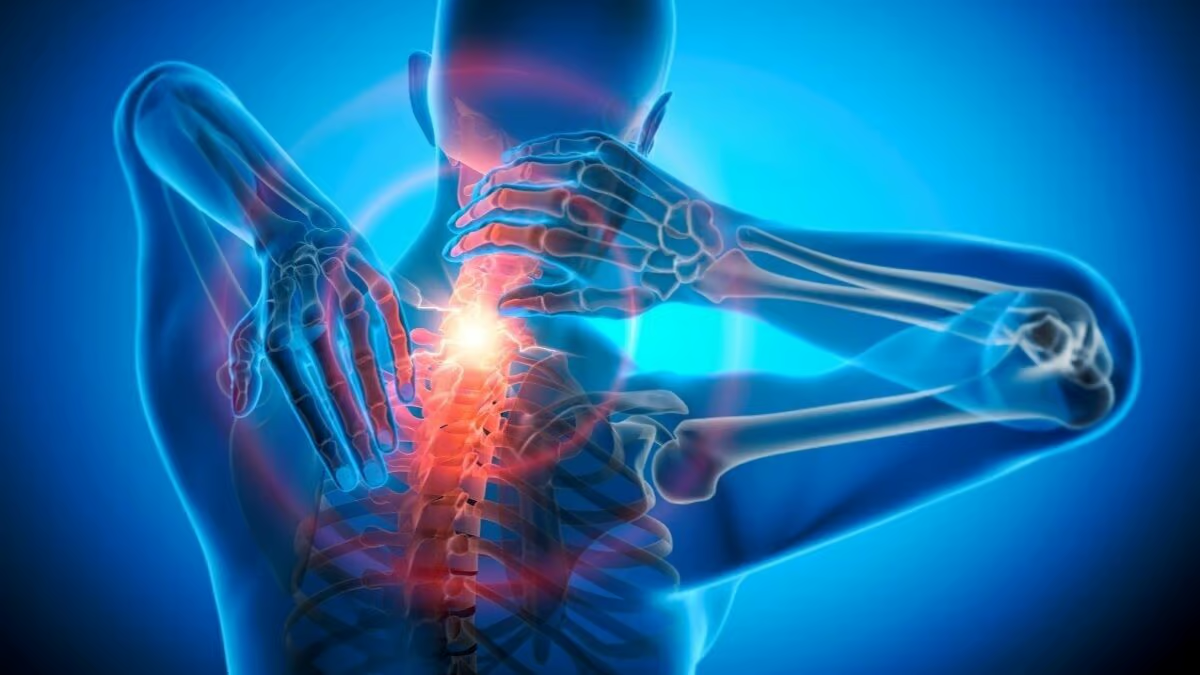
Introduction: A Hidden Muscle Disorder
In the vast landscape of medical terminology, certain words remain largely unknown to the public and even some clinicians. One such term is inomyalgia—a word derived from Greek roots: inos (fiber, sinew, or muscle), myos (muscle), and algos (pain). Used sparingly in historical and modern diagnostic literature, the keyword inomyalgia appears in discussions of musculoskeletal pain that is localized specifically to the fibrous and connective tissues within muscles, as opposed to the joints, bones, or nerves.
While not a household name like “fibromyalgia,” inomyalgia represents a specific clinical concept: pain originating from the muscle’s intrinsic fibers (endomysium, perimysium, and epimysium), often without systemic inflammation or widespread tenderness. This article will explore what inomyalgia means, how it differs from similar conditions, its symptoms, root causes, and a practical treatment guide for those affected.
Understanding inomyalgia is crucial for anyone suffering from chronic, localized muscle pain that has not responded to standard therapies for muscle strain or fibromyalgia. By the end of this guide, you will have a clear roadmap for recognizing, diagnosing, and managing this often-misunderstood condition.
Section 1: Defining Inomyalgia – More Than Just Muscle Pain
1.1 The Etymology and Clinical Use of the Keyword
The term inomyalgia is constructed as follows:
-
Ino- (from Greek is, inos): fiber, tendon, or sinew.
-
-my- : muscle.
-
-algia : pain.
Thus, inomyalgia literally means “pain in the muscle fibers.” Historically, the keyword inomyalgia has been used in older medical texts (late 19th to mid-20th century) to describe a benign, localized myalgia without signs of degeneration or systemic illness. It is rarely used in contemporary ICD-11 coding but persists in rheumatology and sports medicine literature as a descriptive label for a specific pain phenotype.
1.2 How Inomyalgia Differs from Fibromyalgia and Myositis
Many people confuse inomyalgia with fibromyalgia, but key differences exist:
| Feature | Inomyalgia | Fibromyalgia | Myositis |
|---|---|---|---|
| Pain location | Localized to specific muscle fiber groups | Widespread, bilateral, axial plus peripheral | Diffuse muscle weakness and pain |
| Inflammation | None | None | Present (elevated CK, MRI changes) |
| Tender points | Focal, deep within muscle belly | 18 specific tender points (ACR criteria) | Not applicable |
| Fatigue | Mild or absent | Prominent | Severe with weakness |
| Lab findings | Normal | Normal | Elevated muscle enzymes, autoantibodies |
Inomyalgia is essentially a non-inflammatory, non-systemic, mechanical or biochemical pain disorder of the muscle fibers.
Section 2: Symptoms of Inomyalgia – Recognizing the Pattern
Because inomyalgia is underdiagnosed, patients often suffer for years with vague complaints. Recognizing its symptom profile is the first step toward relief.
2.1 Primary Symptoms
The keyword inomyalgia describes the following core manifestations:
-
Localized, deep muscle ache: Unlike superficial skin pain or joint pain, patients describe it as “inside the muscle,” often in a single muscle group (e.g., quadriceps, trapezius, or lumbar paraspinals).
-
Pressure-provoked pain: Direct palpation of the affected muscle belly reproduces the exact pain. There is no radiation along nerve pathways (ruling out radiculopathy).
-
Stiffness without weakness: Morning stiffness lasting less than 30 minutes is common, but muscle strength remains normal on examination.
-
Pain with eccentric contraction: Activities that lengthen the muscle under tension (e.g., walking downstairs for quadriceps inomyalgia) exacerbate symptoms more than concentric contraction.
-
No systemic symptoms: Absence of fever, weight loss, rash, or joint swelling differentiates it from inflammatory myopathies.
2.2 Secondary and Associated Features
-
Sleep disturbance: Pain may worsen at night if the affected muscle is compressed (e.g., lying on a painful gluteal muscle).
-
Compensatory postures: Patients unconsciously alter gait or movement, leading to secondary joint or tendon pain.
-
Trigger point overlap: Some cases of inomyalgia co-exist with myofascial trigger points, but the latter feature referred pain, whereas inomyalgia pain is strictly local.
2.3 Commonly Affected Muscles in Inomyalgia
Clinical reports using the keyword inomyalgia most frequently cite:
-
Trapezius (upper back and neck)
-
Erector spinae (lower back)
-
Gluteus medius (hip/lateral thigh pain)
-
Vastus lateralis (thigh)
-
Infraspinatus (shoulder)
These are typically large, postural muscles subject to repetitive low-level strain.
Section 3: Causes and Risk Factors of Inomyalgia
Understanding the etiology of inomyalgia requires separating predisposing factors from immediate triggers.
3.1 Primary Causes
Unlike traumatic muscle tears, inomyalgia develops insidiously. The leading hypotheses include:
-
Repetitive microtrauma: Hours of poor posture (e.g., slouching at a computer) causes repeated ischemic compression of muscle fibers, leading to localized metabolic distress without overt inflammation.
-
Metabolic myopathy variants: Mild deficiencies in muscle energy metabolism (e.g., CPT-II deficiency, McArdle’s disease) can present solely as inomyalgia during sustained activity, without cramps or myoglobinuria.
-
Fascial restriction: The endomysium (connective tissue around individual fibers) may become fibrotic or dehydrated, restricting fiber gliding and activating nociceptors.
-
Central sensitization (focal): Rarely, a localized area of central hyperexcitability amplifies normal muscle input, but unlike fibromyalgia, this does not generalize.
3.2 Risk Factors
-
Occupation: Prolonged static postures (truck drivers, desk workers, dentists).
-
Age: Most common between 30–55 years.
-
Previous muscle injury: Scarred muscle fibers are more prone to inomyalgia.
-
Nutritional deficiencies: Low vitamin D, magnesium, or CoQ10.
-
Sleep disorders: Non-restorative sleep reduces muscle repair.
3.3 What Does NOT Cause Inomyalgia
Crucially, inomyalgia is not caused by:
-
Autoimmune disease (normal ESR, CRP, CK)
-
Infection
-
Malignancy
-
Medication toxicity (statins cause myositis, not pure inomyalgia)
If any red flags appear (fever, night sweats, rapidly progressive weakness), the diagnosis is not inomyalgia.
Section 4: Diagnosis – How Medical Professionals Identify Inomyalgia
Because no specific blood test or imaging confirms inomyalgia, diagnosis rests on clinical pattern recognition.
4.1 Clinical Diagnostic Criteria (Proposed)
Based on the historic usage of the keyword inomyalgia in rheumatology texts, a working criteria set includes:
-
Major criteria (all required):
-
Localized muscle pain for ≥3 months.
-
Pain reproducible by palpation of that muscle.
-
Normal muscle strength on manual testing.
-
Normal CK, ESR, CRP.
-
-
Minor criteria (at least one):
-
Absence of widespread pain (differentiates from fibromyalgia).
-
Relief with local heat or topical NSAIDs.
-
No neurological deficit on exam.
-
4.2 Diagnostic Tests to Rule Out Look-Alikes
| Test | Purpose | Finding in Inomyalgia |
|---|---|---|
| CK, Aldolase | Rule out myositis | Normal |
| ESR, CRP | Rule out inflammation | Normal |
| EMG/NCS | Rule out neuropathy/myopathy | Normal |
| MRI muscle | Look for edema or fatty infiltration | Normal or mild non-specific change |
| Vitamin D, Mg, TSH | Identify contributing factors | May be abnormal |
4.3 The Role of Diagnostic Injections
One practical tool: ultrasound-guided injection of a small amount of local anesthetic into the most tender spot within the suspected muscle. If pain resolves immediately and returns as the anesthetic wears off (6–12 hours later), this strongly supports inomyalgia over referred pain from a joint or nerve.
Section 5: Treatment Guide for Inomyalgia – A Stepwise Approach
Managing inomyalgia requires a multimodal plan. The keyword inomyalgia directs therapy toward the muscle fiber itself, not systemic medications.
5.1 Conservative and Physical Modalities (First-Line)
5.1.1 Heat therapy
Moist heat (hot packs, warm bath, heating pad) for 15–20 minutes increases blood flow and relaxes muscle fibers. Many patients report that heat is more effective than ice for inomyalgia.
5.1.2 Specific therapeutic exercises
-
Eccentric loading (paradoxically): Although eccentric actions provoke pain initially, a graduated eccentric exercise program (e.g., Alfredson protocol for Achilles, but adapted for other muscles) remodels muscle fibers and reduces chronic nociception.
-
Isometric holds at 70% of maximum for 30 seconds, repeated 5 times, can desensitize local pain pathways.
5.1.3 Manual therapy
Deep transverse friction massage (specifically across the muscle fibers) performed by a physical therapist for 5–10 minutes per session, 3x/week, has shown benefit in small trials referencing inomyalgia.
5.1.4 Dry needling or acupuncture
Needling into the muscle belly (not trigger points specifically) may disrupt abnormal fiber contraction cycles.
5.2 Pharmacological Options (Second-Line)
Medications are adjunctive, not curative, for inomyalgia.
| Drug Class | Example | Evidence in Inomyalgia |
|---|---|---|
| Topical NSAIDs | Diclofenac gel 1% | Effective; minimal systemic absorption |
| Topical lidocaine | 5% patch | Reduces peripheral nociceptor firing |
| Oral NSAIDs | Naproxen 500 mg BID | Modest, short-term only |
| Muscle relaxants | Cyclobenzaprine (low dose, bedtime) | Helps sleep-related muscle tension |
| Low-dose amitriptyline | 10–25 mg at night | If sleep disturbance is prominent |
Avoid: Opioids, systemic corticosteroids, and chronic high-dose NSAIDs (no anti-inflammatory target in true inomyalgia).
5.3 Interventional Procedures (Third-Line)
For refractory inomyalgia (defined as >6 months of daily pain limiting function), consider:
-
Trigger point injection with 0.25% bupivacaine (1–2 mL per muscle) – not steroid.
-
Platelet-rich plasma (PRP) injection into the affected muscle belly – emerging evidence for chronic myalgia.
-
Extracorporeal shockwave therapy (radial shockwave, 0.1 mJ/mm², 2000 pulses) – disrupts fibrotic adhesions.
5.4 Lifestyle and Ergonomic Modifications
-
Workstation assessment: Adjust chair height so knees are at 90°, monitor at eye level to offload trapezius.
-
Sleep positioning: Avoid lying directly on the painful muscle; use supportive pillows.
-
Nutritional support: Correct vitamin D (target 40–60 ng/mL), magnesium (400 mg/day glycinate), and CoQ10 (200 mg/day).
Section 6: Prognosis and Living with Inomyalgia
The outlook for inomyalgia is generally favorable, though it can become chronic if perpetuating factors (poor posture, unaddressed ergonomics) persist.
-
Acute episode (≤3 months): Over 80% resolve with heat, activity modification, and topical NSAIDs.
-
Chronic inomyalgia (>6 months): Requires structured physical therapy and possibly PRP. Approximately 60% achieve meaningful improvement within 6 months of a comprehensive program.
-
Recurrence: Common if the original biomechanical stressor returns (e.g., going back to a poorly designed workstation).
Patients benefit from keeping a pain diary noting which muscle is affected and which activities provoke the specific inomyalgia pattern. Unlike fibromyalgia, inomyalgia does not lead to disability or systemic illness.
Section 7: Frequently Asked Questions (FAQ)
Q1: Is inomyalgia the same as myofascial pain syndrome?
No. Myofascial pain involves trigger points that refer pain to distant sites. The keyword inomyalgia specifies pain that is strictly local to the muscle fibers without referred phenomena. However, they can coexist.
Q2: Can stress cause inomyalgia?
Indirectly. Emotional stress increases resting muscle tone (especially in trapezius and jaw muscles). Sustained increased tone can lead to inomyalgia over weeks to months.
Q3: What blood tests confirm inomyalgia?
None. Diagnosis is clinical. Tests rule out other conditions (myositis, polymyalgia rheumatica). Normal CK, ESR, and CRP support inomyalgia.
Q4: How is inomyalgia treated at home?
Apply moist heat for 15 minutes, perform gentle sustained stretches (30 seconds, 3 repetitions), and use an over-the-counter lidocaine patch. Avoid complete rest—gentle movement improves fiber healing.
Q5: Does inomyalgia show up on MRI or ultrasound?
Usually not. Advanced imaging is normal or shows very mild, non-specific changes. This distinguishes it from myositis (edema on MRI) or muscle tears (hematoma).
Q6: Is inomyalgia a disability?
Rarely. Most patients function fully with modifications. Chronic, treatment-resistant inomyalgia affecting a critical muscle (e.g., infraspinatus in a baseball pitcher) could be occupationally disabling, but it does not qualify for systemic disability benefits.
Q7: Can children get inomyalgia?
Yes, but it is uncommon. Pediatric inomyalgia is usually related to sports overuse (e.g., swimming for shoulder muscles) or poor backpack ergonomics. Treatment is the same—heat, physical therapy, and activity modification.
Q8: What is the difference between inomyalgia and delayed onset muscle soreness (DOMS)?
DOMS occurs 24–72 hours after unaccustomed exercise and resolves spontaneously within 5 days. Inomyalgia persists for months without an obvious initiating workout.
Q9: Are there any natural supplements for inomyalgia?
Limited evidence supports:
-
Magnesium glycinate (300–400 mg/day)
-
Coenzyme Q10 (200–300 mg/day)
-
Vitamin D3 (2000 IU/day if deficient)
-
Omega-3 fatty acids (2 g/day) for general muscle health.
Q10: Should I see a rheumatologist or a physiatrist for suspected inomyalgia?
A physiatrist (physical medicine and rehabilitation) is often best, as they specialize in non-surgical muscle disorders. Rheumatologists are more appropriate if inflammatory myopathy is suspected. A sports medicine physician is another excellent choice.
Conclusion: Bringing Inomyalgia Out of Obscurity
The keyword inomyalgia may be rare in modern medical coding, but the condition it describes—localized, non-inflammatory, mechanical muscle fiber pain—is anything but rare. By understanding its distinct symptoms (focal deep ache, pressure-provoked, normal strength and labs), causes (repetitive microtrauma, metabolic variants, fascial restriction), and targeted treatment (heat, eccentric exercise, topical agents, and in some cases PRP), patients and clinicians can finally put a name to a previously frustrating pain syndrome.
If you have been told “it’s just muscle pain” without further explanation, or if fibromyalgia treatments have failed because your pain is not widespread, raise the possibility of inomyalgia with your healthcare provider. Recognition is the first step to recovery.