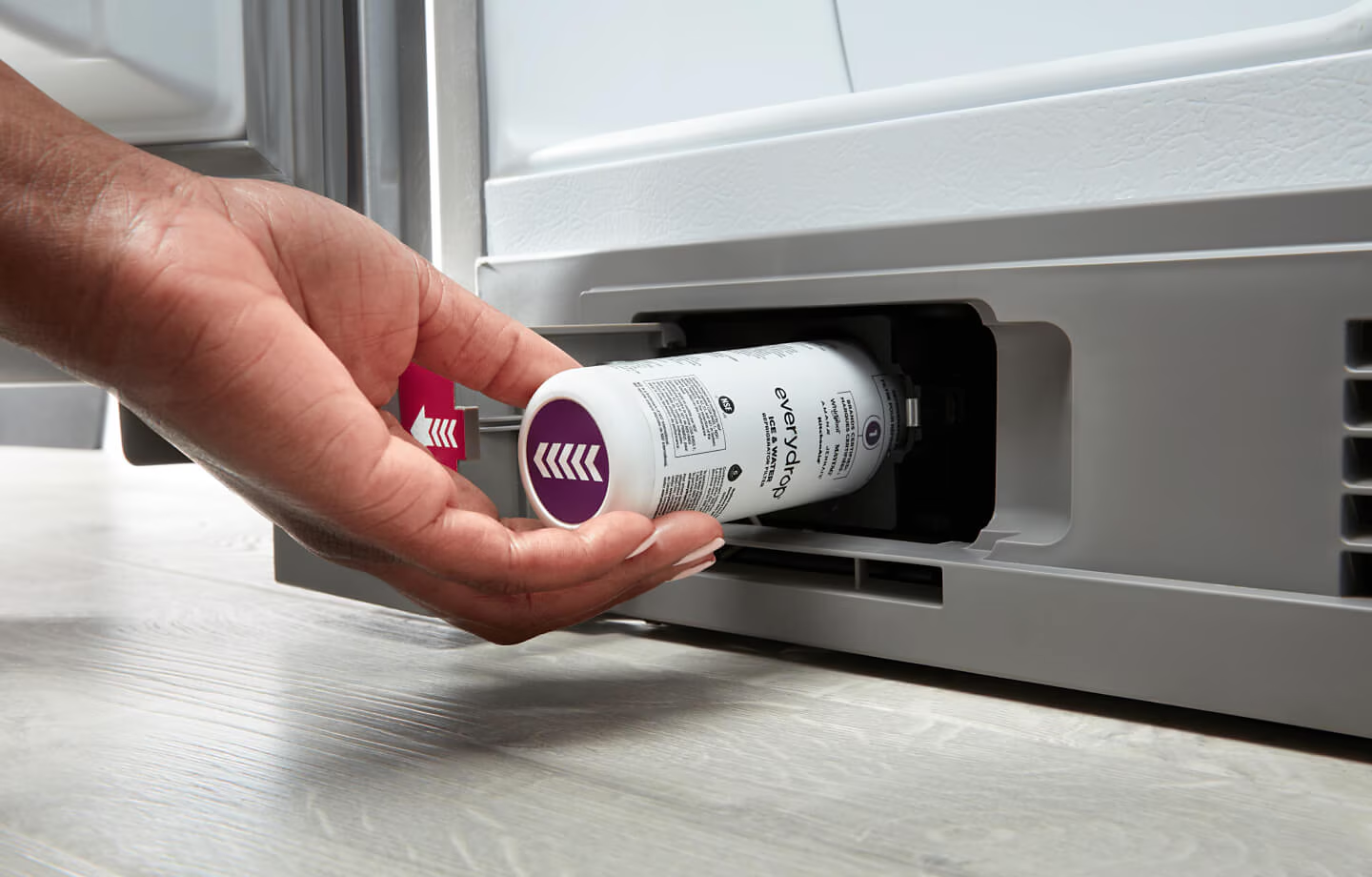
A refrigerator is more than a cooling box. In many homes, it is also the source of chilled drinking water, clear ice, and everyday convenience. That is why Water filter replacement for refrigerator matters more than many people realize. A clean filter supports better water taste, smoother flow, and a more reliable dispenser. It also helps your fridge work the way it should, especially when the water line is used often.
Many modern refrigerators include water filtration systems and even a status indicator that tells you when a filter change is due. Manufacturers commonly recommend replacing the filter about every six months, or sooner if the water flow slows down. Some models also suggest replacement after a certain gallon count, such as 170 to 200 gallons, depending on the unit.
This guide explains how to choose the right filter, when to change it, what signs to watch for, and how to install a new one with confidence. It also includes practical advice for keeping your refrigerator fresh, clean, and dependable without making the process feel complicated.
Why a refrigerator water filter deserves regular attention
A water filter inside the refrigerator does a quiet job every day. It sits between the water supply and the dispenser, helping improve the water you drink and the ice you use. Over time, though, the filter collects impurities and loses performance. When that happens, the water may taste dull, the dispenser may slow down, and the ice maker may not produce as smoothly as before.
That is why regular replacement is not just a maintenance task. It is a habit that protects convenience. A fridge with a dispenser can become one of the most-used appliances in the house, so keeping its filter in good condition supports both comfort and cleanliness. Refrigerator water filters are also designed to reduce a range of contaminants, though exact performance depends on the model and water quality. Whirlpool notes that some filters can reduce lead and up to dozens of other contaminants, while also recommending replacement every six months for clean results.
When people delay replacement, they often notice small warning signs first: a slower pour, a weaker stream, a slightly stale taste, or ice that seems less fresh. These signs are useful because they appear before a larger problem develops. Paying attention to them makes maintenance simple.
Signs that the filter is ready to be changed
One of the easiest ways to avoid trouble is to look for early signals. A filter usually does not fail all at once. It becomes less effective gradually, and the refrigerator often gives clues along the way.
A slower water dispenser is one of the clearest signs. If water starts to drip instead of flow normally, the filter may be clogged. Another common sign is a change in taste or smell. Fresh filtered water should not taste flat, metallic, or overly stale. Some users also notice that the ice maker makes smaller cubes, produces less ice, or seems to work more slowly than before. Whirlpool and GE both identify reduced flow as a reason to replace the filter earlier than the usual schedule.
A status light can also help. Some refrigerators include an indicator that reminds you when the filter has reached its service life. Samsung explains that many refrigerators use a water filter light and recommends resetting that light after installation of a new filter so the reminder starts again.
These signs are simple, but they matter. Once you notice one or more of them, it is usually time to plan Water filter replacement for refrigerator before the quality of the water drops further.
How often replacement should happen
For most households, the best starting point is the six-month mark. That schedule appears again and again across major refrigerator brands. Whirlpool recommends replacing the filter every six months for clean and reliable water, and GE gives similar guidance while also noting that some models use gallon-based limits.
Six months is a practical average, but it is not a rigid rule. If your family uses the dispenser heavily, if your tap water carries more sediment, or if the fridge serves a large household, the filter may need changing sooner. On the other hand, a lightly used refrigerator might not show problems right away. The easiest rule is this: follow the manufacturer’s schedule first, and then pay attention to water flow, taste, and the indicator light.
That approach keeps maintenance simple and avoids guesswork. It also prevents a common mistake, which is waiting until the water tastes obviously bad. By the time the taste changes dramatically, the filter has usually been underperforming for some time. A steady replacement habit is better than a reactive one.
A sensible maintenance rhythm also helps you stay organized. Many people set reminders on a phone, write the date on the new filter box, or schedule replacements at the start of each season. That keeps the process easy to remember and reduces the chance of forgetting.
Choosing the right replacement filter
Not every filter is the same. Even when two filters look similar, they may not fit the same refrigerator model. That is why compatibility matters first. Check your refrigerator’s model number, the filter number printed on the old cartridge, and the manufacturer’s guidance before buying a replacement.
There are usually two broad choices: original equipment filters and compatible third-party filters. Original filters are made for the appliance brand and often provide the most direct fit. Compatible filters may be less expensive, but they should still match the model exactly and come from a source you trust. A poor fit can cause leaks, weak water flow, or a filter that does not lock into place properly.
It also helps to look for performance information. Some filters are designed to reduce specific contaminants, and some carry certification details that give more confidence in what they are built to do. Whirlpool states that different filters can reduce different contaminant levels, so comparing models before buying is wise.
When people search for Water filter replacement for refrigerator, they sometimes focus only on price. Price matters, but compatibility matters more. A filter that fits well and performs consistently is usually the better choice, even if it costs a little more.
Original filters versus compatible filters
Original filters are often the simplest option because they are made for the specific appliance line. They usually reduce the chance of mismatch and make installation smoother. Compatible filters can still work well, but they require more careful checking.
Before choosing a compatible option, compare the model number exactly, look at user feedback, and verify that the seller is reliable. A low-cost filter that leaks or needs frequent reseating is not a good bargain. It can create frustration and waste time.
What to check before buying
Look at the refrigerator model number.
Check the filter number on the old cartridge.
Confirm whether the filter twists, slides, or snaps in.
Review the manufacturer’s recommended replacement interval.
Make sure the packaging clearly matches your refrigerator line.
These checks only take a few minutes, but they save a lot of trouble later.
Step-by-step process for replacing the filter
The exact method depends on the refrigerator model, but the basic process is usually straightforward. Most owners can handle it without tools. In many designs, the water supply does not need to be turned off for the replacement itself, though it is still wise to read the manual for your model before you begin. GE states that the water supply does not have to be turned off when replacing the filter on some models.
Before you begin
Start by identifying the filter location. Some filters sit inside the refrigerator compartment, some are in the grille near the bottom, and some are hidden behind a panel. Clear a small space nearby so you can work comfortably. Keep a towel ready in case of a few drops of water.
It is also smart to check the manual or the manufacturer’s support page before opening the filter compartment. A quick look now can save time later and help prevent a wrong turn or a stuck cartridge.
Remove the old cartridge
Open the filter cover or access panel.
Twist, press, or pull the old filter according to the design.
Remove it slowly and keep the opening level if possible.
Expect a small amount of water to drip.
Some filters release with a quarter turn. Others slide out after a button is pressed. If the cartridge feels stuck, do not force it too hard. A careful, steady motion is better than sudden pressure.
Install the new filter
Unwrap the new cartridge.
Check the seal and the alignment marks.
Insert the filter in the same direction as the old one.
Lock it in place until it feels secure.
Once the new filter is seated, the refrigerator may need a few minutes to settle. After that, run water through the dispenser to flush the line. This helps clear trapped air and removes any loose carbon dust that may be present after installation.
Reset the indicator light
If your refrigerator uses a filter reminder light, reset it after the new filter is installed. Samsung explains that the indicator should be reset so the countdown begins again after replacement.
That small step matters because the reminder system is only useful when it starts fresh. If you forget to reset it, the fridge may keep showing an old warning and create confusion later.
Common mistakes to avoid
A lot of people make the process harder than it needs to be. The biggest mistake is waiting too long. A worn filter can still let water through, which makes it easy to ignore. But weak performance slowly affects taste, flow, and ice quality.
Another common mistake is buying the wrong cartridge. Filters may look similar online, yet still be incompatible. That is why model matching is important. A quick check before ordering is much easier than returning the wrong item later.
A third mistake is forgetting to flush the new filter. The first few glasses after installation may not be the best representation of how the filter will perform. Flushing helps the system settle and improves the first use experience.
It is also wise not to ignore the indicator light. If the light says the filter is due, treat that reminder as part of the fridge’s maintenance system. It is there to help, not to decorate the control panel.
Finally, do not assume that the new filter will solve every water issue immediately. If taste or flow remains poor after correct installation, the issue may involve water pressure, a kinked line, or another part of the refrigerator system. In that case, a closer inspection may be necessary.
Keeping the refrigerator water system in better shape
Good maintenance does not stop with filter changes. A fridge water system works best when it is treated as part of the overall appliance, not as a separate add-on. Clean the dispenser area regularly. Wipe the outside surface around the water outlet. Check for dust or residue around the filter compartment. Keep the refrigerator level and make sure the water line is not bent or pressed tightly behind the unit.
These small habits help keep the system stable. They also make Water filter replacement for refrigerator feel less like an emergency task and more like a normal part of home care.
It can also help to keep a simple maintenance note. Write down the installation date, the filter model number, and the expected replacement date. That way, the next change is easy to plan. Families that share kitchen duties often find this especially useful because everyone knows when the last replacement happened.
If your household uses a lot of water and ice, consider checking the filter a little sooner than the standard schedule. Heavy use can shorten the practical life of a cartridge even when the calendar has not reached six months yet. The goal is not to replace too often. The goal is to replace before performance drops.
Water quality, taste, and daily comfort
One of the main reasons people care about refrigerator filters is simple: they want water that tastes fresh. When a filter is new and working well, the difference is usually noticeable. Water feels cleaner, ice tastes less stale, and the dispenser becomes a small but reliable convenience in daily life.
Taste is not the only benefit, though. A good filter helps create a smoother routine around meals, hydration, and family use. Children are more likely to drink water when it tastes better. Guests notice the difference too. Even small improvements matter when they happen every day.
That is why the habit of replacement has value beyond technical maintenance. It supports a better kitchen routine. A refrigerator is one of the hardest-working appliances in the house, and a clean filter helps it do its job without friction. When the system is maintained well, the whole kitchen feels easier to use.
This is also where consistency matters most. A one-time replacement is helpful, but a repeat schedule is what keeps results steady. The best outcome comes from making the task routine instead of treating it as a rare event.
What to do if the water still tastes odd after replacement
Sometimes the new filter goes in correctly, but the water still does not taste right. That can happen. In those cases, the problem may not be the filter alone.
Check whether the filter is fully seated.
Run enough water through the dispenser to flush the line.
Look at the water supply line for bends or pressure issues.
Confirm that the filter matches the refrigerator model.
Review the manual for any model-specific reset steps.
If the issue continues after these checks, the water supply itself may need attention. A weak line, build-up in another part of the system, or an older dispenser component can all affect the result. It is best to solve those issues step by step instead of assuming the cartridge is always at fault.
That practical mindset saves time and money. It also helps you avoid replacing a filter twice when only one correct replacement was needed.
A simple home routine that keeps the task easy
The easiest maintenance plan is the one you can repeat. Here is a practical routine many households can follow:
Replace the filter about every six months.
Check the indicator light regularly.
Notice changes in taste, smell, or water pressure.
Write down the date of the last replacement.
Keep the filter model number in a note on your phone.
This routine is simple, but it works. It prevents last-minute frustration and keeps the refrigerator’s water system dependable. That is the real value of Water filter replacement for refrigerator: it keeps one small appliance task from becoming a larger household problem.
Related reading from Business To Mark
For more home-focused reading, these Business To Mark articles may be useful:
“Simple DIY Home Decor Ideas to Make Your Living Room Look Expensive”
“Contemporary Bathroom Design Trends for Modern Homes”
“Best Real Estate Investment Tips with Smart Home Design”
Final thoughts
A refrigerator filter may be a small part inside a large appliance, but it has a big influence on daily comfort. Clean water, better ice, stronger flow, and a fresher taste all depend on a cartridge that is changed on time. Manufacturer guidance commonly points to replacement every six months, or sooner when flow weakens or an indicator light appears.
